Sports Injury Treatment in London & Reading
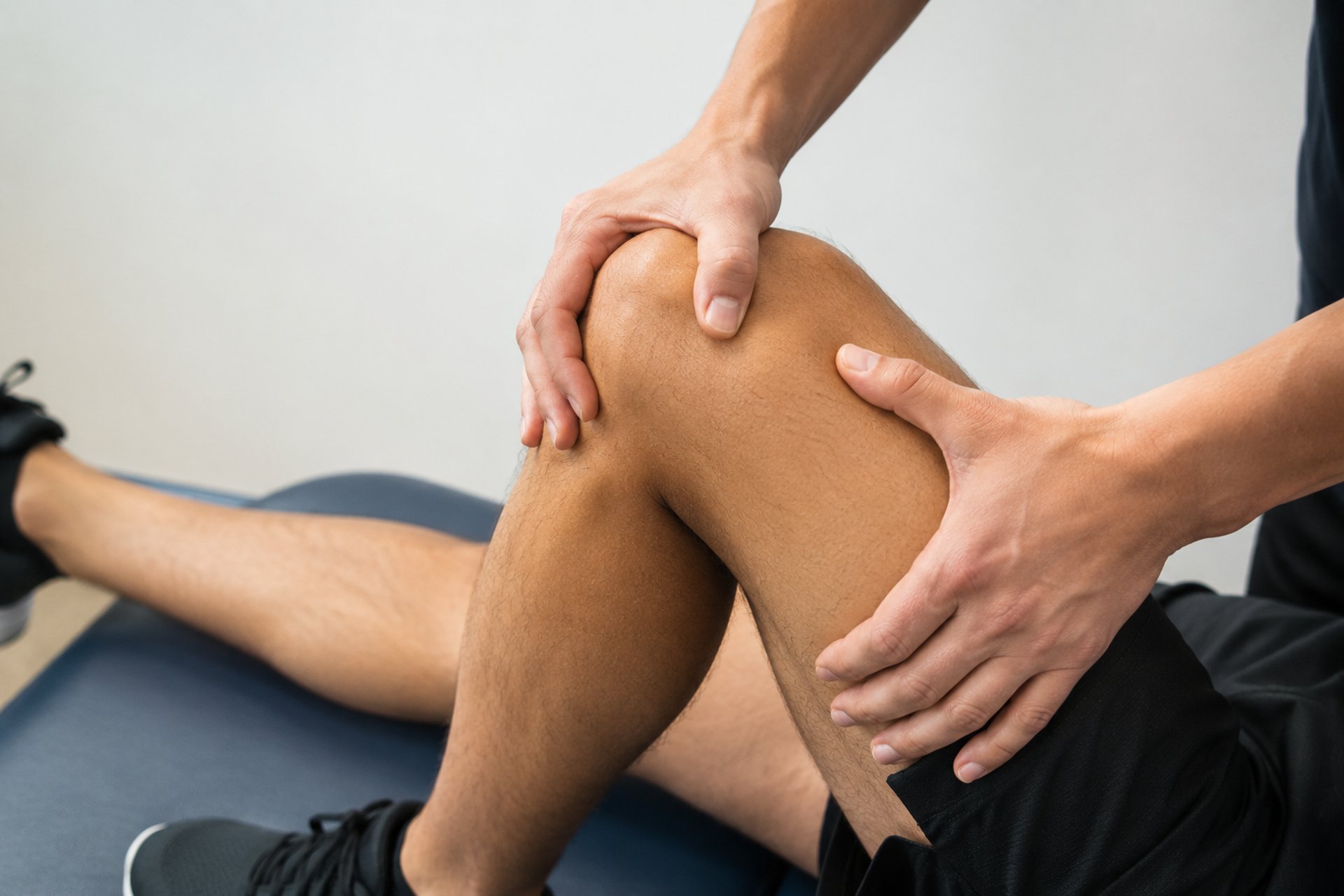
You trained hard. Now your knee locks up on the stairs, your shoulder pulls every time you reach overhead, or your lower back seizes after a run. At Yin-Yang Chinese Medicine Clinic, our Hong Kong-registered practitioners apply clinical-grade acupuncture, Tui Na and bone setting to resolve the structural root of your injury. Browse our full Pain & Conditions Overview for the wider spectrum of conditions we treat.
What Is a Sports Injury? Common Types We Treat
Sports injuries span a wide range of tissue damage — from acute trauma to cumulative overuse. Conventional rest-and-anti-inflammatory protocols often address symptoms without restoring full biomechanical function. That gap is where TCM intervenes effectively.
Muscle Strains & Ligament Sprains
Grades I–III ankle, wrist and knee sprains. Without targeted repair, partial tears scar in misaligned collagen patterns.
Knee & Shoulder Overuse
Patellofemoral syndrome, IT band friction, rotator cuff impingement. Escalates to structural failure if untreated.
Lower Back Pain
Lumbar strain, disc compression, sacroiliac dysfunction — the leading reason active adults abandon training. See also: Back Pain & Sciatica.
Tendinitis & Fasciitis
Achilles tendinopathy, plantar fasciitis. Acupuncture accelerates cellular repair rather than merely suppressing inflammation.
Why TCM Works for Sports Injuries — The Clinical Logic
TCM is not a replacement for sports medicine. It is a parallel clinical system with distinct advantages in tissue repair, pain neuroscience and restoring joint mobility without surgical intervention.
Inflammation & Pain Signals
Fine-gauge needles stimulate A-delta and C-fibre pathways, triggering endogenous opioid release and modulating the inflammatory cascade at the injury site. Measurable reduction in swelling and faster range-of-motion restoration.
Structural Recovery
Graded manual pressure releases myofascial restrictions. Bone setting corrects joint misalignment that persists post-injury and perpetuates compensation patterns throughout the kinetic chain.
Beyond Generic Physio
Every practitioner holds a Master of TCM and trained under Hong Kong's registration system — one of the most rigorous globally. The standard you relied on in Hong Kong is the standard delivered here.
Our Treatment Process — From Assessment to Recovery
Initial Diagnosis
Classical TCM diagnostics combined with orthopaedic assessment: range-of-motion testing, palpation, and functional movement screening. No contributing factor — postural, neurological or systemic — is overlooked.
Personalised Treatment Plan
Plans are built around your sport, training volume, recovery timeline and health context. A marathon runner's Achilles tendinitis requires a different approach than a footballer's. No one-size protocol.
Recovery Milestones & What to Expect
Most patients notice meaningful reduction in acute pain within the first two to three sessions. Transparent progress benchmarks are set at the outset so patients understand what recovery actually looks like.
1
2
3
Treated at Both Our Clinics
Wimbledon SW19
Serving an Active South London Community
Club tennis players, weekend cyclists, parkrun regulars and gym athletes. Same-week availability and practitioners experienced in high-demand musculoskeletal caseloads.
Reading, Castle St
Flexible Appointments for Working Professionals
Early morning and early evening slots available across the week — suited to professionals managing injury recovery around full-time commitments.
For session fees, see our Pricing & Insurance page.
Sports Injury vs. Chronic Pain — Know the Difference
Understanding which category your condition falls into directly determines the treatment strategy.
If your presentation spans both columns — a sports injury unresolved for over three months — that crossover is precisely what our clinical assessment is designed to identify.
Frequently Asked Questions
Can acupuncture help a sports injury that hasn't healed after months of physio?
Yes. Physiotherapy and TCM address different physiological layers. Where physio focuses on mechanical load and tissue strengthening, acupuncture targets the neurological and inflammatory environment that determines whether tissue actually heals. Patients who plateau with physio frequently see renewed progress when acupuncture is introduced alongside it.
Is TCM treatment safe for athletes who are still in active training?
In most cases, yes. Treatment is calibrated around your current training load. The practitioner will advise on session timing relative to training days to optimise the recovery response without disrupting your programme.
Do I need a GP referral to book an appointment?
No referral is required. You can book directly at either our Wimbledon or Reading clinic.
How is Yin-Yang Chinese Medicine different from a general acupuncture clinic?
Our practitioners are Hong Kong-registered Chinese Medicine Practitioners holding Master of TCM qualifications with hospital-level clinical backgrounds. The diagnostic rigour and treatment precision reflects a standard that is rare outside Hong Kong specialist environments — now available in London and Reading.
Do you treat both professional athletes and recreational participants?
Both. Whether you compete at club level or train for personal fitness, the clinical approach is the same: accurate diagnosis, targeted treatment, measurable outcomes.
What should I bring to my first appointment?
Any imaging you have — MRI, X-ray or ultrasound reports — is useful but not required. Wear or bring clothing that allows access to the affected area. No other preparation is needed.
Ready to recover properly?
Book at Wimbledon SW19 or Reading Castle Street — no referral needed.
Contact
Ready to book?
+44 07301 949 686
© 2025. Yin Yang CMC All rights reserved.
Phone
Reach us anytime — we usually respond within the hour.